
Are Upright Rows a Good, Safe Exercise for Shoulders?
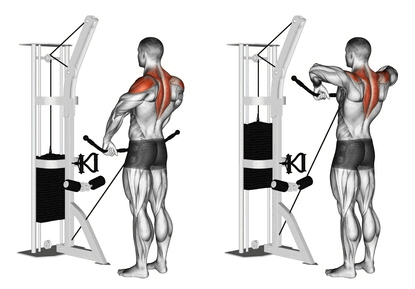
Are upright rows a good, safe exercise for building my deltoids and trapezius muscles?
Also, I have read that upright rows will damage my rotator cuffs and put undue stress on my shoulder joints. Do you think upright rows will hurt my shoulders?
Answer: Unfortunately with upright rows, it is not a question of IF you will hurt your shoulders but most likely WHEN you will hurt your shoulders.
The position that your arms get placed in when doing the upright row causes what is called "impingement". Essentially this means that every time you raise the bar up, the bones in your shoulders pinch the tendons in your rotator cuff. This can cause instant pain in some people (myself included - I can't even do the movement without weight without hurting) but will inevitably lead to long-term degeneration of the structures of the shoulder joint. I would stay far away from this movement. It can end your training career if you do it heavy and often. Many people continue to do this exercise because, aside from the creeping shoulder joint injury problem, the exercise does work the shoulder and trapezius muscles strongly. And some people can perform it with no problem for years and never have an issue. Stick to shoulder presses and various lateral raises for working the shoulders and shrugs for working the traps. Other exercises you should watch out for to avoid injury are behind-the-neck barbell shoulder presses and behind-the-neck pulldowns. These two movements put tension on the shoulder joint in it's most vulnerable position. I would strongly recommend against doing these. |
More From Fitstep.com
Site Search

Subscribe to my YouTube Channel
And see every new exercise and training technique when it's released!
Recommended For You...
Return To Prime
Build muscle and strength like you did 20 years ago by turning back your physiological "muscle clock." This revolutionary approach to training will keep you strong and muscular like aging never even happened.
Learn the secrets to building muscle after 40, 50, 60 and beyond!