

The Ultimate Guide to Magnesium: Types, Benefits, and Best Supplements for Health
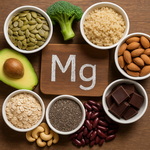
TL;DR Guide to Magnesium
- Magnesium is involved in hundreds of reactions in the body, including energy production, nerve function, muscle relaxation, hormone support and detoxification.
- Modern diets (refined grains, low-magnesium soils, boiling vegetables), prescription medications, stress and fluoride in water all contribute to widespread magnesium deficiency.
- Magnesium works closely with calcium and vitamin D: low magnesium plus high calcium can lead to cramps and tension, and converting vitamin D into its active form uses up magnesium.
- The “best” magnesium is the one your body tolerates, that fits your goals (sleep, brain, heart, muscles, digestion) and that you can take consistently without side effects.
One Product mentioned in this article:
• Magnesium Breakthrough by BIOptimizers – a blend of seven different magnesium types for broad benefits; not ideal if citrate specifically bothers your system.
Issue #4 - Magnesium
You’ve heard of a Code Red, but have you ever heard of a Code Brown? Find out about the many different kinds of magnesium supplements, which ones to avoid and which ones to try. And, of course, you will read about the weird things that happened to me with certain magnesium supplements.
Our bodies need magnesium. It's as simple as that.
It is needed for hundreds of different enzymatic reactions in our bodies. Energy production, protein synthesis, nervous system support, detoxification, hormone support and muscle relaxation are but a few of its tasks.
Unfortunately, a lot of people are deficient in magnesium. Why is that?
There are many foods that contain magnesium, including green vegetables, nuts, seeds, legumes and unprocessed grains. But the soil these foods are grown in isn't as rich in magnesium as it used to be. When we eat refined foods like white flour, the bran and germ have been removed and the magnesium lost. Boiling vegetables also causes magnesium to be leeched out.
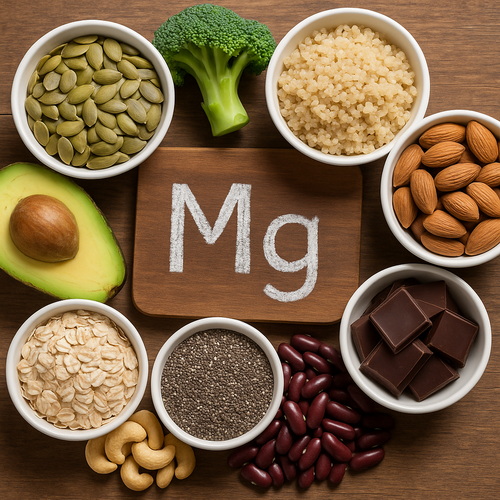
And, when you read about amounts of magnesium in food, keep in mind that you absorb only about 50% of the magnesium found in that food.
Pharmaceutical drugs, including statins, interact with magnesium and can contribute to magnesium deficiency. If you take any prescriptions, it's worth doing some reading on how that particular drug affects magnesium levels.
People are stressed out and stress hormones like cortisol deplete magnesium.
Other minerals and vitamins play a role in our magnesium levels as well.
Magnesium and calcium have an important relationship within the body. Magnesium makes your muscles work properly by allowing calcium to cause a muscle contraction and then pushing it out of the muscle cells so they can relax. If magnesium is low and calcium is high, muscles stay in a contracted state and you end up with cramps, tension headaches and spasms.
If you eat dairy products, you are getting a lot of calcium compared to magnesium.
Vitamin D helps your body absorb calcium. Magnesium is used to change vitamin D from its storage form, which is the form supplements are in, to its active form. If you take a lot of vitamin D in supplement form, you chew up a lot of your magnesium in order to convert it.
So, add magnesium to help your body use vitamin D, which then helps your body absorb calcium.
Magnesium can bind to fluoride in water, making it unavailable to your body, so consider drinking water that has the fluoride filtered out when taking a magnesium supplement.
So, supplementing with magnesium is a great idea. Can you take too much?
Yes, you can, but the body has a built-in system to quickly handle that. It's called diarrhea. In my house, we call it a “Code Brown” situation.
There are many different forms of magnesium found in supplements and they have different levels of absorption. There are different delivery methods as well.
In general, tablets are tougher for the stomach to deal with than capsules and cheaper for manufacturers to produce. Liquids will be better absorbed than capsules.
Magnesium oxide and citrate are typically found in laxative products. You absorb only about 4% of magnesium oxide so it's not a great daily supplement option. There are better options out there.
You absorb around 30% of the citrate which makes it a better daily choice.
Chelated magnesium, which means it is bound to an organic amino acid, is also better absorbed than the oxide form at approximately 24%. Examples include malate (good for muscle issues), glycinate (good for sleep), threonate (good for the brain), taurate and orotate (good for the heart).
I came across a few types of magnesium you might want to avoid or read more about before deciding whether or not they are right for you.
Magnesium asparate is well absorbed but the asparate is a component of aspartame, the artificial sweetener. Too much can overstimulate the brain, becoming neurotoxic.
Magnesium glutamate, which contains the excitatory amino acid glutamic acid, can also become neurotoxic and adversely affect depression and anxiety levels. If you find that the food additive MSG (monosodium glutamate) doesn't agree with you, I would suggest avoiding magnesium glutamate.
I have tried many different magnesium supplements.
Since the body needs it for so many things, I knew it was going to be vital to my healing process. I needed it to help with painful muscle and fascial stiffness, brain fog, heart palpitations, digestion, detoxification and adrenal support. I wanted to absorb as much of it as I could.
I started with magnesium citrate as that's a very common one. I tried tablets and powder.
Tablets are tougher for the stomach to break down so I wasn't seeing any positive results.
I tried the popular Natural Calm effervescent powder before bed but it kept me up at night rather than creating any sense of calm the very name of the product implies. Most people do really well with this product and it helps them relax and sleep when they take it at night.

Citrate can stimulate the brain too much in some people, so don't feel like you are the only one in the world who doesn't respond well to citrate. Why this happens, I don't know.
I have come across anecdotes from other people but I haven't been able to find a solid scientific explanation. If it happens to you, consider a different form of magnesium.
I tried various magnesium glycinate capsules which agreed with me just fine but didn't give me the noticeable positive results I was hoping for. So, the search continued.
I tried magnesium orotate next because I wanted something to help my heart.
Funny story though. I had been taking it for a few months when my doctor, as part of the process of figuring out how to treat me, wanted to test my organic acid levels. She called me with the results and was really concerned. You see, my orotic acid level was really high and it made no sense.
Normally, high orotic acid levels indicate a genetic disorder which is diagnosed in infancy.
I was going to have to get genetic testing done, which was going to be a big ordeal with special referrals to the local children's hospital due to my current non-infant status. You can see where I'm going with this, I'm guessing.
During the conversation, I slowly, due to my brain fog, began to realize maybe it was actually related to my magnesium orotate supplement that the doctor didn't know I was taking. I wasn't experiencing any side effects from the supplement so it wasn't my first thought.
What to do? Do I confess? I sheepishly explained that I had been taking magnesium orotate and perhaps that was the cause. No genetic test needed.
I began looking for another option that hopefully wouldn't show up in a random test result and set off alarm bells at my doctor's office.
I had been taking liposomal vitamin C and wondered if there was such a thing as liposomal magnesium.
Liposomes are a delivery method for vitamins and minerals. The vitamin or mineral is surrounded by a type of fat cell. That fat cell, similar to your cell membrane, can then be absorbed by your cells without being broken down in the stomach.
I tried a couple of different liquid liposomal magnesium products that were packaged in bottles.
But, when liquid supplements come in bottles, they usually require preservatives like potassium sorbate. Potassium sorbate is a problem when you are, like myself, sensitive to or intolerant of histamine (yes, it's a thing and I'll be writing about it in more detail in the future).
Preservatives that are high in histamine can cause a variety of unpleasant symptoms. So, those bottles didn't work for me.
I came across a liposomal magnesium threonate product from LivonLabs that is great for your brain.
Luckily, it comes in individual serving packages so no worries with preservatives. It gave me vivid dreams and sharp recollections of old memories, which was pretty interesting. But, it's quite expensive. So, when it happened to go out of stock, I had a break from it and then decided to put my supplement dollars to different use.
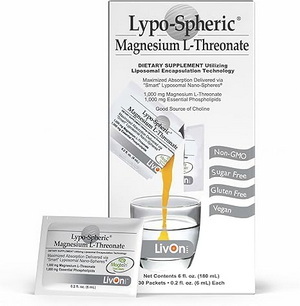
I guess this product didn't help me enough that I wanted to continue paying the price. I have not tried magnesium threonate in a different form, so I don't know how it compares in price vs. results.
During my magnesium research 10 years ago, I found Dr. Carolyn Dean and her Magnesium Miracle book.
A lot of the general information in the beginning of this article is sourced from her book. For me, her book was a game changer.

She is also the creator of a magnesium product called ReMag, which uses magnesium chloride, that gives you 100% absorption through it's picometer sized stabilized ions of magnesium. It generally avoids the laxative effect of other types of magnesium so you won't experience a “Code Brown” unless you take a big dose all at once.
Imagine a ramp leading to the entrance of a cell membrane. A single picometer sized magnesium ion is smaller than the ramp leading into the cell. It walks right in.
It's so potent that you have to start at a really small dose, as in drops, not teaspoons.
One of the first things that happens when you get a good dose of magnesium is that your body starts to get rid of toxins built up in the body. When I first started it, did it ever!
I started having UTI symptoms that turned out to be me peeing out toxins. Since my UTI urine tests were negative, I reached out to Dr. Dean by email and she confirmed that the symptoms I was experiencing were very possibly from detoxing.
I stopped the ReMag and the symptoms went away. I waited awhile and started again. Low and slow. This time, I was okay.
Since that time, I have continued to use her magnesium product as my main magnesium supplement. At this time, I am adding two teaspoons of ReMag to two liters of filtered fluoride free water and drinking it through out the day. It's working well. Some people find that it tastes unpleasant, but I like it. Perhaps that means that my body likes it as well.
I have also tried magnesium oils and creams as a way to get more magnesium into my muscles as well as Epsom salt baths (magnesium sulfate).
Keep in mind that oils and creams won't reach deeper muscles. For example, it will help with foot cramps but not PMS cramps.
I found the oils to be a bit messy as they typically leave a salt residue as they dry. That salt can create a burning feeling on your skin.
But, Dr. Dean has a magnesium cream called ReMag Lotion Plus that is far less messy and doesn't cause nearly as much burning. When I get foot cramps in the middle of the night her magnesium cream works fast to relieve the pain. It's really thick so one bottle lasts a long time.

Some people can't tolerate any form of oral supplement so magnesium creams, oils or baths can be helpful.
You will likely get a better deal on shipping if you check out her amazon.com page.
I also like the concept of a magnesium supplement that contains different types of magnesium because you get a wider range of benefits. Nick recommends Magnesium Breakthrough from BIOptimizers as it contains seven different types of magnesium. I haven't tried it because it contains magnesium citrate, which doesn't agree with me.
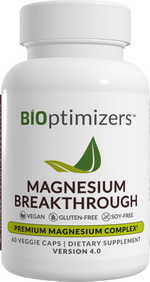
To sum things up, try eating magnesium rich foods and adding a magnesium supplement that works for you. Your body will be very happy you did.
Stay tuned for the next issue of Good Health Under Construction where I write about foods in the nightshade family, the common and painful inflammatory conditions that could be helped by cutting them from your diet and what happened when I cut them from my diet.
Nick's sister, Alexis
More From Fitstep.com
| Stink Training for Bringing Up Weak Bodyparts | |
| Fat Loss Circuit Training With Dumbbell Crawling | |
| The Great Big List of Calorie-Free Foods | |
| 4 Tips For Larger, Firmer, Rounder Glutes |
Site Search

Subscribe to my YouTube Channel
And see every new exercise and training technique when it's released!
Recommended For You...
The Starting Monday Diet
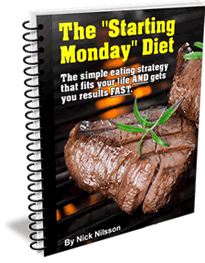
Learn how to eat for fat loss WITHOUT losing muscle or strength. This simple, week-based diet program will get you ripped AND strong. This is the best "no guilt" diet program I've ever put together.
Discover the easiest way to get lean and KEEP your muscle...