By Nick Nilsson
Author of Gluteus to the Maximus - Build a Bigger Butt NOW
Wider hips...it may not be the most common goal of women who train but, I can promise you, there are a LOT of women out there who would LOVE to build wider hips without putting on a lot of fat.
I'll tell you right now, it's not going to be easy but it definitely CAN be done!

But first...want to know the reason why it's so tough to increase hip width without gaining a lot of fat in the area? It all comes down to your bones.
You see, hip width (not counting fat deposits in the area) is primarily determined by your pelvis size. If you've got genetically narrow hip bones (you can thank your parents for that!), it's going to be much tougher to achieve the wider hips you're looking for.
It's the very same situation with the shoulders - if you want wider shoulders, you're limited by bone structure. You then have to focus on building the lateral delts (the side heads of the shoulder muscles) to give the appearance of wider shoulders.
But the only hitch with the hips is that there really isn't a whole lot of muscle mass available to build onto the outside of your pelvis! In that respect, it's actually EASIER to build wider shoulders with weight training than it is to build wider hips.
The main muscles that operate in the hip area (for our purposes) are the three glute muscles...the gluteus maximus (the main butt muscle), gluteus medius and gluteus minimus.
The primary function of the gluteus maximus is to bring the leg backwards (a.k.a. hip extension). It's a big, powerful muscle because this function is our primary method of moving forward! Every time you push backwards to take a step, that's the gluteus maximus at work.
But the smaller gluteus medius and minimus muscles are what we'll need to focus on to try and increase hip width. These two muscles are what's known as abductors.
Abduction is the biomechanical term for moving a limb AWAY from the midline of the body. In this case, it's moving the thigh away from the center of the body. If you're familiar with adduction (where you bring the legs in towards each other and squeeze the thighs together), it's the opposite movement.
So to widen the hips through training, we need to focus some intense work on the gluteus medius and minimus muscles. And when I say intense work, I'm NOT talking about those light pumping movements where you try and "go for the burn!"
For our purposes, those are not only a waste of time but completely counterproductive. Light weight exercises won't build hips and will interfere with the muscle-building stimulus we're going for that WILL actually build the hips. So toss "The Firm" videos back into the pile if you want to build wider hips. Those won't cut it.
If you want results, it's time to break out the dumbbells and barbells and dig into some REAL weight training.
The absolute BEST exercise for increasing hip width is NOT an isolation abduction exercise. You may have seen abduction machines in the gym where you sit on a chair and force your legs outwards against resistance. I'm sure you've seen them...they always seem to place those machines directly across from the cardio equipment or opposite the gym entrance!
The best exercise for increasing hip width is called the Side Lunge and it can be done with a barbell OR dumbbells.
But I'm not going to have you do the NORMAL side lunge...that exercise forces you to use lighter weights so you don't strain your knees. This version allows for more resistance and, therefore, more potential muscle growth and hip width!
So how do you do the Side Lunge? Well, the "normal" technique has you starting in a standing position. Then you step one foot directly out to the side (sometimes at angle forwards rather than directly to the side) and lower your body down into a lunge. You come down, bending your knee, then you push all the way back up to the standing position.
The problem with this technique is the lateral stress that gets placed on the knee when you step down to the side. The knees aren't designed to take a lot of sideways pressure - they're all about going forward and back (like a hinge). There's some room to manu ever but sideways movement against momentum can be tough on the knees - just ask any running back in football!
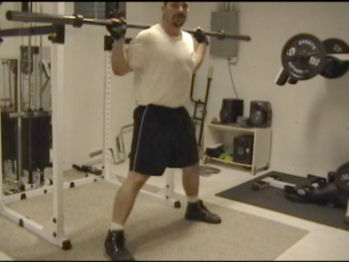
So instead of stepping out to the side on each rep then pushing all the way back up, we're going to do it differently. You'll take that first step out to the side and plant your foot about 2 feet out. And you're going to keep it there.
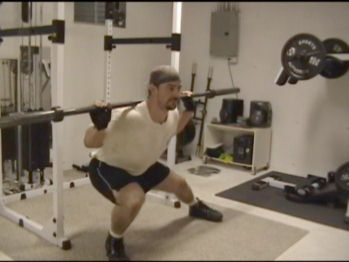
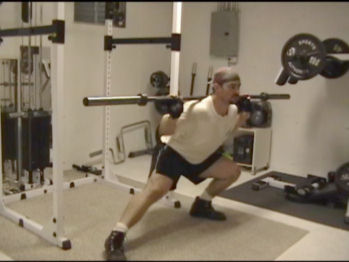
If you stepped out to the right, bend your right knee and come down into a lunge position. Your left leg will be completely straight and act as a pivot. Come down until your thigh is parallel to the ground then, using hip power, push yourself back up, straightening your right leg but WITHOUT popping all the way back to a standing position where your feet are together.
Remember, we're keeping our feet in the SAME position for the whole exercise.
When you come to the top, you're now going to lunge down to the OTHER side. Come down until your leg knee is bent 90 degrees then push back back up. Again, you're NOT popping up to a total standing position - just straightening your legs. This not only spares your knees, it allows you to keep tension on the muscles better AND use heavier resistance.
You can do this exercise with a barbell or 2 dumbbells. When using a barbell, just hold it across your shoulders and be careful with your balance. If you do this exercise with a barbell, it's best to use a rack so you don't have to press the weight overhead and set it down on your shoulders. Just note, you'll be doing this exercise OUTSIDE the rack.
Barbell Side Lunges

The dumbbell version will be the easiest setup.
When you perform the exercise, hand position is important. If you're lunging down to the right, the right-hand dumbbell should be on the outside of your right hip. The left-hand dumbbell should be held in front of your body down between your legs. This is the best position for balance and resistance.
Then you just reverse it when you go down to the other side - left dumbbell on the outside of your left hip and right dumbbell down in between your legs.
Dumbbell Side Lunges
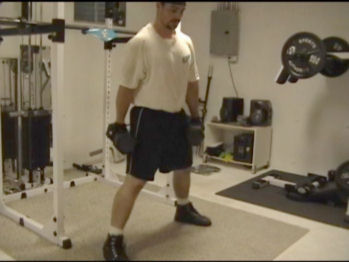
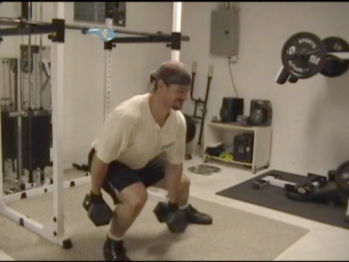
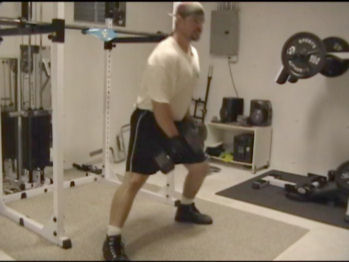
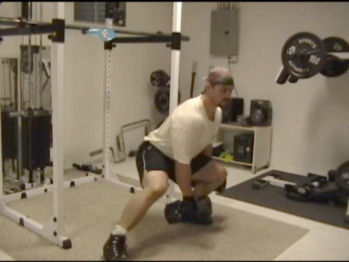
The first time you do this exercise, use a light to moderate weight so you get an idea of how the exercise is performed. Once you feel comfortable with it, THEN starting boosting the weight.
-
Ideally, you want to use a weight where you can ONLY get 8 to 10 reps on each side. You have to challenge the muscles to see results. Sets of 15 to 20 reps won't build the hips.
-
Do 3 sets of this exercise with 60 to 90 seconds rest in between sets.
THEN you go onto the abduction-isolation style of exercise for targeting the gluteus medius and minimus directly.
-
For this one, we're NOT going to be using any machines. This is a dumbbell exercise all the way. It's easy to set up, though!
-
All you need is a single dumbbell - again, start with a light to moderate-weight dumbbell to get an idea of how to do the exercise before you move up in weight.
-
In standing position, hold the dumbbell in your left hand and hold onto something solid with your right. The left dumbbell should be resting on the side of your upper thigh.
-
Now just explode up with your left leg directly out to the side as high as possible and hold it there for a second or two! You should feel a strong squeeze in your outer hip area.
-
With this exercise, use a POWERFUL movement and don't be afraid to start building up to heavier weights. This isn't a "squeezy-toney" type of exercise. We're going for an explosive push up and out to the side.
Side Dumbbell Abductions
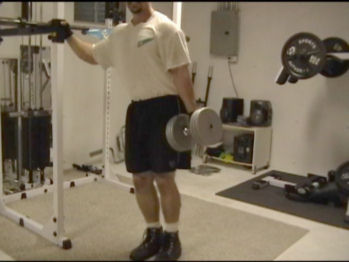
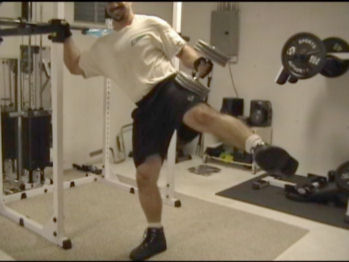
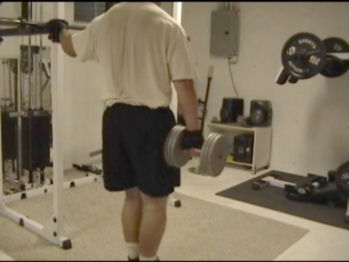
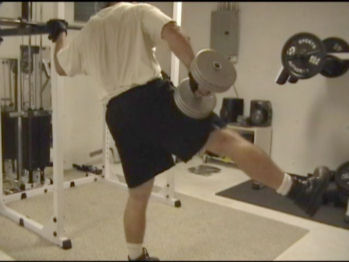
When you've done 6 to 8 reps on the left left, switch over to the right leg and do the same thing. Rest 60 seconds after you've done both legs then repeat for 2 more sets (3 sets total). Remember, once you're familiar with the exercise, start piling on the weight so that you can ONLY get those 6 to 8 reps. If you can get more reps, increase the weight next time.
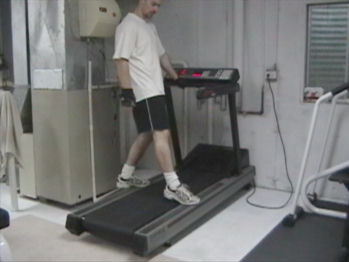
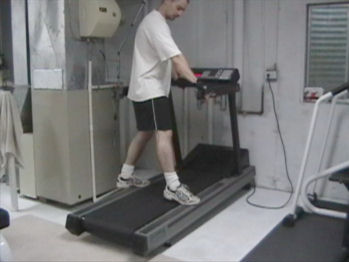
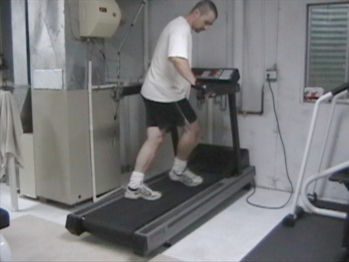
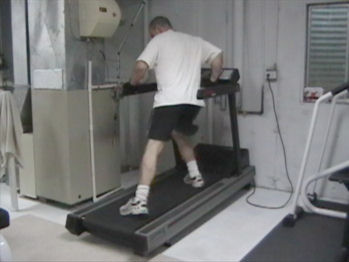
Now we're going to add in the final segment of the wider-hip workout... Sideways Treadmill Walking.
This is a unique way to use the treadmill that gives you two main effects. The first is increasing blood supply to the outer hips (which is important to help support muscle growth). The second is putting a stretch on the outer hip muscles with each step you take.
-
Be sure to watch the video on this one so you know how to do it before you step on the treadmill sideways!
-
First, set the treadmill on a bit of incline - this will give you greater resistance, better stretch and faster results. About 3 to 5% grade is good.
-
Set the treadmill to a slow speed - 2 to 3 mph is a good starting point. Stand on the side panel of the treadmill (right beside the tread), facing left. Grip the side rail in front of you and the front rail to your right. This will stabilize you in 2 planes and allow you to get yourself off the treads if you stumble.
-
With this exercise, you are basically going to be walking sideways with leg cross-overs while on the treadmill.
-
When facing left, step on FIRST with your right foot, then immediately cross over it with your left foot to get started. Watch your feet and stay on the middle of the tread.
-
Our goal is to use this technique to get a great stretch. To do this, exaggerate the length of your step and keep a VERY slow speed on the treadmill (e.g. 2 mph). With this long step, you'll get a STRONG outer thigh and glute stretch with every rep (on the higher leg) and a good muscle-pumping workout on the lower leg.
-
Go for about a minute facing that way then step off, take a short rest, e.g. 30 seconds, then do a minute facing the other direction. Repeat this for 5 to 10 minutes.
Sideways Treadmill Walking
The Overall Hip-Widening Program
Here is what the total hip-widening program is going to look like:
-
3 sets Side Lunges - 8 to 10 reps on each leg going back and forth between legs
-
3 sets Side Dumbbell Abductions - 6 to 8 explosive reps on each leg
-
5 to 10 minutes of Sideways Treadmill Walking - 1 minute intervals in each direction
This program can be done 3 times a week to really focus strongly on building up the outer hips.

More From Fitstep.com
| Exponential Drop Sets...Murderous Training for Massive Growth | |
| 5 Fat-Loss Myths That Are KILLING Your Results | |
| Where Do I Start With Fitness? Start Here. | |
| 4 Tips For Larger, Firmer, Rounder Glutes |
Share This Page...
---
Home -> Muscle and Strength -> Workouts -> Widen Your Hips