
This Angio Set for biceps is going to alternate light dumbbell curls and heavier barbell curls. The goal of this training is to force as much blood into the biceps as possible over an extended period of time (4+ minutes) in order to force your body to create new blood vessels (angiogenesis).
I'm showing the entire set at regular speed here so you can get an idea of what the exact set performance looks like. The form isn't perfect on all the reps, nor does it need to be for our purposes here! It's fine to loosen up form in order to push as much blood into the muscle as possible.
Towards the end, you'll notice that I switch up my position on the curls, bracing my back against the upright of the power rack. I also switch the light curls to alternating in order to get more reps.
Here's what a step-by-step rundown will look like...NO rest in between steps...
(Get as many reps as you can, close to failure on the light sets...the rep numbers there are just for an example not as guidelines).
Step 1 - 30-50 reps of light dumbbell curls
Step 2 - 2 reps of heavy barbell curls
Step 3 - 15 reps of light dumbbell curls (reduced reps due to fatigue)
Step 4 - 2 reps of heavy barbell curls
Step 5 - 10 reps of light dumbbell curls
Step 6 - 2 reps of heavy barbell curls
Step 7 - 5 reps of light dumbbell curls
Step 8 - 2 reps of heavy barbell curls
Step 9 - 2 reps of light dumbbell curls
Step 10 - 2 reps of heavy barbell curls
Step 11 - 2 reps of light dumbbell curls
Step 12 - 2 reps of heavy barbell curls
Done
That's ONE Angio Set. Then you'll rest 3 minutes and do it one more time (2 Angio Sets is all you need).
How to Perform an Angio Set
- Once you've got your weights set up and ready to go, perform as many
reps as you can with the light exercise (dumbbell curls in the example below). You want to be sure you're
using a light enough weight that you can get at least 30-50 or more reps on this
first set.
- Perform reps until lactate accumulation slows you down. DO NOT push to the limit here...the idea on this first set is not to push to failure but to push until it starts getting hard to move the weight due to the drop in pH from lactate accumulation.
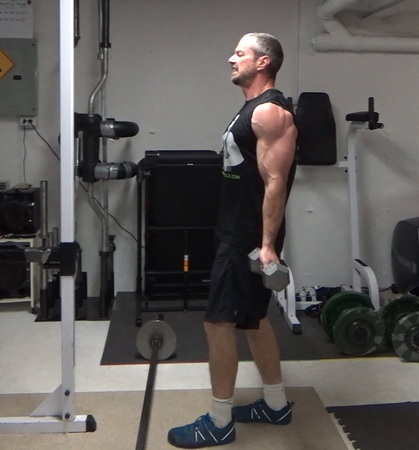
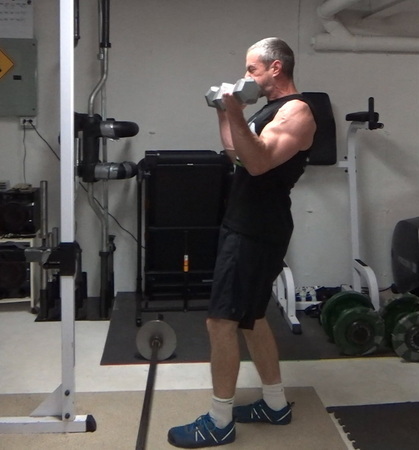
- In other words, we're pushing CLOSE to the limit but not right up to it...yet....
- We want to achieve this because lactate accumulation means you're in a hypoxic (oxygen poor) state...which is another BIG stimulus for the body to create new blood vessels.
- Set down the weight then immediately do 2 reps of the heavy exercise (barbell curls here) to activate the Type 2 fibers. And when I say immediately, I mean IMMEDIATELY. This is not rest.
- The only rest you get is the time it takes to set down one weight and get started with the other. Working with a heavier load will suck up even MORE oxygen from your bloodstream, further increasing the hypoxic state you're in.
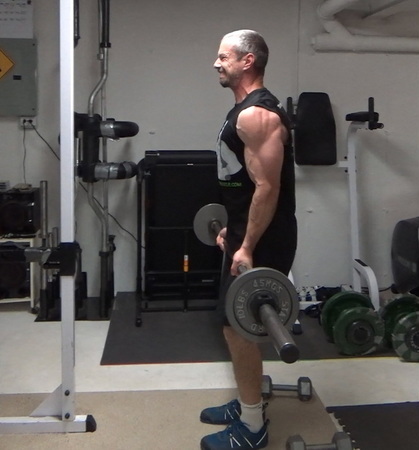
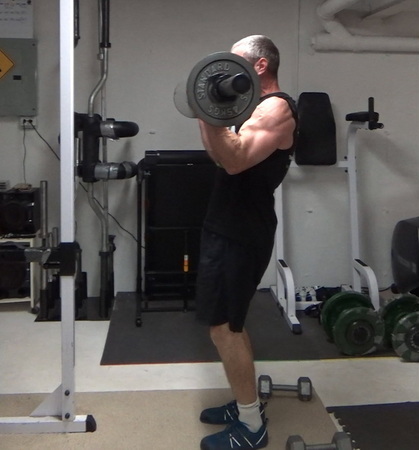
Now, in addition to the other effects, working with the much heavier load like this also increases your "local" blood pressure in the target muscle during the lift. This is good because one of the keys to forging new pathways for blood to flow is to FORCE the small blood vessels to rupture.
By filling the muscles up with massive amounts of blood then putting MUCH heavier loads on the body, that jump in blood pressure will (in theory...I don't have research backing this up, just logic) help enhance the rupturing process for creating new blood vessels.
When you do these two rep sets, focus on performing a STRONG contraction of the target muscle. Really squeeze it for all it's worth. We want to increase the blood pressure within that muscle as much as possible. It should be a hard contraction...literally to the point of being painful.
This technique will FLOOD your biceps with blood, forcing your body to create NEW blood vessels in response to help better feed those muscles for future growth.
We're using this special form of "pump" training to push your body to create MORE tiny blood vessels to supply your biceps with nutrient-rich blood.
Click here to discover my methods for dramatically improving your underlying muscle physiology to better support muscle mass at ANY age (circulation, connective tissue, muscle fiber number and nervous system activation)...